






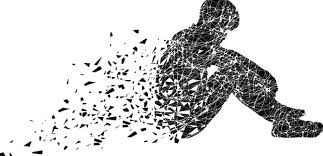
There are many different mental disorders, with different presentations. They are generally characterized by a combination of abnormal thoughts, perceptions, emotions, behaviour and relationships with others.
| Disorder | Share of global population with disorder (2017) | Number of people with the disorder (2017) | Share of males:females with disorder (2017) |
|---|---|---|---|
| Any mental health disorder | 10.7% | 792 million | 9.3% males, 11.9% females |
| Depression | 3.4%, [2-6%] | 264 million | 2.7% males, 4.1% females |
| Anxienty disorder | 3.8%, [2.5-7%] | 284 million | 2.8% males, 4.7% females |
| Bipolar disorder | 0.6%, [0.3-1.2%] | 46 million | 20.55% males, 0.65% females |
| Schizophrenia and other psychoses | 0.3%, [0.2-0.4%] | 20 million | 0.26% males, 0.25% females |
| Any mental or substance use disorder | 13%, [11-18%] | 970 million | 12.6% males, 13.3% females |
Depression is a common mental disorder and one of the main causes of disability worldwide. Globally, an estimated 264 million people are affected by depression. More women are affected than men. Depression is characterized by sadness, loss of interest or pleasure, feelings of guilt or low self-worth, disturbed sleep or appetite, tiredness, and poor concentration.People with depression may also have multiple physical complaints with no apparent physical cause. Depression can be long-lasting or recurrent, substantially impairing people’s ability to function at work or school and to cope with daily life. At its most severe, depression can lead to suicide.
This disorder affects about 45 million people worldwide. It typically consists of both manic and depressive episodes separated by periods of normal mood. Manic episodes involve elevated or irritable mood, over-activity, rapid speech, inflated self-esteem and a decreased need for sleep. People who have manic attacks but do not experience depressive episodes are also classified as having bipolar disorder. Effective treatments are available for the treatment of the acute phase of bipolar disorder and the prevention of relapse. These are medicines that stabilize mood. Psychosocial support is an important component of treatment.
Schizophrenia is a severe mental disorder, affecting 20 million people worldwide. Psychoses, including schizophrenia, are characterized by distortions in thinking, perception, emotions, language, sense of self and behaviour. Common psychotic experiences include hallucinations (hearing, seeing or feeling things that are not there) and delusions (fixed false beliefs or suspicions that are firmly held even when there is evidence to the contrary). The disorder can make it difficult for people affected to work or study normally. Schizophrenia typically begins in late adolescence or early adulthood.Treatment with medicines and psychosocial support is effective. With appropriate treatment and social support, affected people can lead a productive life and be integrated in society.
Anxiety disorders are a group of mental disorders characterized by significant feelings of anxiety and fear. Anxiety is a worry about future events, while fear is a reaction to current events. These feelings may cause physical symptoms, such as increased heart rate and shakiness.There are several anxiety disorders, including: generalized anxiety disorder, specific phobia, social anxiety disorder, separation anxiety disorder, agoraphobia, panic disorder, selective mutism etc.
Click me to see more!
We all sometimes feel depressed and do things we certainly should not do. Below are some options that we need to select in the appropriate columns.
Isolating yourself for days
Going for a walk
Staying inside all day
Focusing on the past.
Meeting friends
Feeling sorry for yourself
Exercising
Grieving alone
Meditation